V-Key

V-Key

V-Key

Three steps to fight the Mobile Security status quo

50 minutes per day. That’s the amount of time an average user spends on Facebook, Facebook Messenger, and Instagram. There are lots of reasons for the “stickiness” of these social networking apps, but a big part of their appeal is what they don’t have—friction. When a user taps the Facebook app on their phone, it opens to their newsfeed immediately. They don’t even need to key in their username and password—Facebook already knows who they are.Logging into an online banking app should be this frictionless. But instead, users are forced to jump through multiple hoops to prove their identities, inputting not just a username and password, but a one-time password (OTP) generated by a dongle or sent over SMS. Though it increases security, this tedious process costs users time—and banks money. According to McKinsey, one major bank that optimized its digital channels to decrease friction and increase personalization raised its margins by $300 million. Any bank that’s not striving to make its app as frictionless as Facebook’s is leaving that money—and more—on the table.

And yet, many financial institutions aren’t striving whatsoever. They’ve accepted a status quo that sacrifices user experience for increased security—even when that security is itself unreliable (we’ll get to this below). This is a huge missed opportunity. Mobile digital identity is quickly becoming central to an entire suite of online services, including not just banking but enterprise and government functions. Institutions willing to challenge the status quo and work toward creating frictionless, secure mobile solutions will set themselves up to prosper and grow—while those that don’t doom themselves to fall behind.

But if companies want to challenge the status quo, where should they start? Below, we describe three oft-ignored areas of research that could yield revolutionary innovations in mobile fraud prevention—and make today’s friction-filled user experiences a thing of the past.

1. Build a software security token that works

Many banking institutions have accepted the inconvenience of hardware-based security solutions as the non-negotiable price of preventing hacking attacks. However, these solutions aren’t as foolproof as their complicated structure makes them seem. As the famous 2011 hack of RSA tokens goes to show (or the more recent case in Singapore where 50 smartphones were hit by malware targeting mobile banking customers), hardware dongles don’t guard against one of the simplest of all hacker tactics: phishing. Because the dongle is totally isolated from the software, the user can be tricked into providing a OTP for an action different from the one that they think they are engaging in. In the case of a financial transaction, the attacker is then able to alter the payee, the account number, or other information in order to divert funds away from the victim’s account and to another source.

A software security token that displayed the OTP on the device screen next to the prompt for the associated action to be taken, or that sent it directly to the mobile banking server from the user’s device, would solve this problem by connecting the generated code and the action. It would also eliminate the need for a friction-inducing hardware dongle. However, even today’s state-of-the-art software security tokens are relatively easy to crack—a committed attacker can gain access to one within 2-3 days, provided they have physical possession of the device.

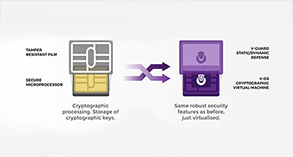
That’s not to say, though, that a more secure software solution is an impossible dream. With all the focus on hardware security over the past decades, innovation on the software side has been neglected. By investing into a new platform that replicates hardware security in software, a forward-thinking company could come up with a new solution—one that would make phishing attacks a thing of the past.


2. Design an OS that apps can trust

Every smartphone on the market today has a secure hardware element or elements. The iPhone has a secure enclave where the Touch ID fingerprint is processed, for instance, and encryption for GSM calls is processed through a secure element on the phone’s SIM card. However, mobile applications can’t access any of these secure hardware elements directly. Instead, they have to trust the phone’s underlying OS when it tells them that a user has been authenticated.

This is very problematic for application providers. Any app will be rolled out to millions of mobile devices, at least some of which will be jailbroken, rooted, or infected with malware. In these cases, the assumption that the application can trust the front line operating system doesn’t actually hold. The current solution of providing hardware dongles is a workaround for this issue—but as noted above, it’s not a foolproof one. If a company could design a secure element that apps could safely access—verifying identity directly instead of trusting the OS—it would eliminate the need for such workarounds, and open up the possibility of near-frictionless logins for secure apps.


3. Process private information in the device itself

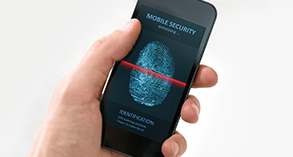
From banks to governments, more and more institutions today are looking at biometrics like fingerprints, retinal scans, and facial recognition to identify end users. This approach has many friction-reducing advantages: it eliminates the need for the user to type in (or memorize) a password or to carry around a dongle in order to prove their identity. However, it also raises serious privacy concerns. Under the current system, biometric information collected by a device usually must be cross-referenced with existing records, i.e. a driver’s license database, on an outside server. This creates multiple vulnerabilities to a hacking attack, as well as compliance concerns for companies storing such sensitive information on their backend.

However, all is not lost. If the authentication process happened entirely inside the device—in a secure element that apps could access directly, without having to trust an OS, for instance—the privacy issue with biometrics could be avoided entirely. Logins to mobile apps could finally be both frictionless and secure: users would just have to press down their fingerprint or snap a selfie.

There you have it: a roadmap to creating an app as frictionless as Facebook, but more secure than today’s most hacker-proof online banking platform. For too long, mobile security has focused myopically on hardware; it’s time for mobile app providers to reverse that bias and begin exploring potentially transformative software innovations. Their users’ privacy and security—and their own companies’ bottom lines—depend on it.

With contribution from the Hippo Thinks research network.

 

Other articles:

V-OS FIDO2 Server Achieves Official FIDO2 Certification

V-Key is pleased to announce that the V-OS FIDO2 Server has officially obtained FIDO2 certification, marking a major milestone in…
Redefining Digital Identity with AI-Driven Intelligence and Trust

Redefining Digital Identity with AI-Driven Intelligence and Trust

As digital interactions expand across industries, organizations face a growing identity challenge: verifying users securely while keeping onboarding effortless and…
BSSN Common Criteria Compliance for Stronger Security

BSSN Common Criteria Compliance for Stronger Security

Indonesia’s digital economy is expanding rapidly, with financial services, telecoms, and government agencies increasingly reliant on secure digital platforms. To…

Securing Banking Through APRA Compliance with V-Key

Securing Banking Through APRA Compliance with V-Key

In Australia’s financial services sector, regulatory compliance is inseparable from trust and resilience. The Australian Prudential Regulation Authority (APRA) plays…
V-Key at COBA 2025: Strengthening Digital Identity and Compliance in Australia

V-Key at COBA 2025: Strengthening Digital Identity and Compliance in Australia

AUGUST, 2025 — The COBA 2025 Conference once again proved to be the premier gathering for Australia’s customer-owned banking sector.…

Shield in Minutes and Keep Your Mobile App Fast and Secure

Mobile apps have become the primary gateway for users to browse, purchase, book, track, earn rewards, and engage in real…

Modern Authentication in ANZ: Finding the Balance Between Security and User Experience

In Australia and New Zealand, authentication has reached a turning point.  Banking apps, telco platforms, superannuation portals, and digital health…

How to Choose the Right Authenticator

Authentication is essential for ensuring that only authorized individuals gain access while keeping unauthorized users out.

Navigating Business, Technology and Trust: V-Key at AIBP Malaysia 2025

The AIBP Conference & Exhibition 2025 in Kuala Lumpur brought together decision-makers from across the financial services, enterprise, and technology…
V-Key Expands to Japan, Enhancing Mobile App and Digital Identity Security

V-Key Expands to Japan, Enhancing Mobile App and Digital Identity Security

2025 June — V-Key is expanding into Japan, bringing trusted digital identity and mobile app protection to one of the…
Built for RMiT, Securing Malaysia’s Financial Future with V-Key

Built for RMiT, Securing Malaysia’s Financial Future with V-Key

More than just a requirement, compliance is what helps businesses stay strong and keep customer trust intact. This is especially…
How V-Key ID Enhances Banking Security

How V-Key ID Enhances Banking Security

In Australia’s highly regulated financial environment, robust digital identity and authentication controls aren’t just best practice, they’re a compliance imperative.…
Why Developers Shouldn’t Have to Choose Between Speed and Security

Why Developers Shouldn’t Have to Choose Between Speed and Security

Mobile development moves fast. There are always new features to launch, bugs to fix, and deadlines to meet—and developers are…
The Real Cost of Mobile App Breaches and How to Stay Ahead of Threats

The Real Cost of Mobile App Breaches and How to Stay Ahead of Threats

Mobile apps have become the primary engagement channel for modern businesses. Whether it’s a healthcare portal, an e-commerce platform, a…
The Fake SMS That Looks Real

The Fake SMS That Looks Real

Why Indonesia needs to talk about digital trust—now.  It usually begins with a simple SMS. You’re going about your day,…
Building Digital Trust with V-Key at the State Bank of Vietnam Event 

Building Digital Trust with V-Key at the State Bank of Vietnam Event 

2025 April, Vietnam –  V-Key had the privilege of participating in the State Bank of Vietnam (SBV) CIO Roundtable event…
Journey to  Passwordless Authentication

Journey to Passwordless Authentication

Is it the Beginning of the End of Passwords?  In the wake of cyber-attacks at some of the biggest Superannuation…
Vietnam’s New Digital Security Regulations: Strengthening Mobile and Biometric Protections

Vietnam’s New Digital Security Regulations: Strengthening Mobile and Biometric Protections

Vietnam is rapidly enhancing its digital security landscape. In just the past six months, two major regulations—Decision 2345 (effective July…
Mobile Malware Landscape in 2024: Why App Security Is Critical for Businesses

Mobile Malware Landscape in 2024: Why App Security Is Critical for Businesses

Mobile malware attacks are rising as mobile banking, digital payments, and remote authentication become mainstream. In 2024, over 33.3 million…
Strengthening Australia’s Digital Identity Future 

Strengthening Australia’s Digital Identity Future 

Australia is making significant progress in digital identity adoption, with the federal government leading efforts through its national Digital ID…
Beyond OTPs: The Shift to Passwordless Authentication in Banking

Beyond OTPs: The Shift to Passwordless Authentication in Banking

The Bangko Sentral ng Pilipinas (BSP) is considering phasing out one-time passwords (OTPs) for digital banking transactions, citing the growing…
V-Key Continues to Expand in Australia to Strengthen Digital Identity and Authentication

V-Key Continues to Expand in Australia to Strengthen Digital Identity and Authentication

V-Key strengthens its presence in Australia by participating in the FIDO Alliance events in Melbourne, reinforcing its commitment to digital…
Why Passwordless Authentication is the Future of Security

Why Passwordless Authentication is the Future of Security

Managing passwords can be challenging. They can be difficult to remember, and often, people reuse them across multiple sites, which…
Protect Your Business All Year with V-Key ID and FIDO2

Protect Your Business All Year with V-Key ID and FIDO2

Lunar New Year is a time for celebration for many people around the world, but it’s also a good opportunity…
V-Key’s 2024 Journey in Advancing Digital Security and Empowering Seamless Digital Experiences

V-Key’s 2024 Journey in Advancing Digital Security and Empowering Seamless Digital Experiences

As we reflect on 2024, V-Key is proud of the milestones we’ve achieved and the innovations we’ve introduced in the…
5 Simple and Effective Ways to Secure Your Mobile App with V-OS App Shield

5 Simple and Effective Ways to Secure Your Mobile App with V-OS App Shield

For businesses, especially those handling sensitive data or financial transactions, ensuring app security is no longer optional. The risk is…
Securing Mobile Apps and Why It’s Critical for Businesses

Securing Mobile Apps and Why It’s Critical for Businesses

Mobile devices continue to become indispensable, with the average smartphone user spending around 88% of their day interacting with apps.…
Introducing V-OS App Shield: Connect, Deploy and Protect your App in Minutes

Introducing V-OS App Shield: Connect, Deploy and Protect your App in Minutes

Mobile applications are key to daily business operations, customer engagement, and overall functionality. According to Google, the average smartphone user…
V-Key partners with Bridge Alliance to build a Safer Digital Ecosystem

V-Key partners with Bridge Alliance to build a Safer Digital Ecosystem

V-Key, renowned for its advanced security solutions has proudly joined Bridge Alliance as their technology Partner,  solidifying their commitment to…
Making 2FA/MFA robust against smishing and related attacks

Making 2FA/MFA robust against smishing and related attacks

2FA/MFA was introduced to make it harder for attackers, by requiring two or more proofs of identity – also known…
How do we determine the effectiveness of mobile apps’ security systems?

How do we determine the effectiveness of mobile apps’ security systems?

With the spate of remote working regime due to Coronavirus pandemic, the reliance and growth for video conferencing platform has…
Is the detection of jailbroken/rooted phone sufficient against threats?

Is the detection of jailbroken/rooted phone sufficient against threats?

Functions that detect jailbroken/rooted devices are most commonly added to transactional mobile applications, serving as the most basic defense against…
V-OS Protection against Android Plugin malware

V-OS Protection against Android Plugin malware

There has been a recent surge in Android malware abusing Android Plugin Frameworks for malicious behavior. DroidPlugin, Parallel Space and…

V-OS Protection against CPU vulnerabilities

Virtually every computing device in the world is made unsafe by the latest disclosures on Central Processing Unit (CPU) vulnerabilities.…
The next wave of Finance: Singapore’s growing Fintech market

The next wave of Finance: Singapore’s growing Fintech market

With global cumulative investment in financial technology (fintech) forecast to exceed US$150 billion in three to five years, economies around…
Infographic: The next frontier in Banking transformation

Infographic: The next frontier in Banking transformation

As technology evolves, banks and financial institutions have no choice but to innovate. However, when it comes to security, many…
Is software-based Biometrics Authentication the solution to ASEAN’s regulatory challenges?

Is software-based Biometrics Authentication the solution to ASEAN’s regulatory challenges?

Banks in Southeast Asia should look towards software-based biometrics as the way forward to navigate the regulatory differences in the…
How does a Virtual Smart card protect a customer if they lose or change their mobile phone?

How does a Virtual Smart card protect a customer if they lose or change their mobile phone?

From banks to government agencies, many organisations are intrigued by and exploring software security solutions such as mobile tokens and…
Building V-OS with HSM

Building V-OS with HSM

V-OS is the world’s first virtual secure element, a software solution with security built into the firmware code. These include…
Cryptography in V-OS

Cryptography in V-OS

V-OS is the world’s first virtual secure element. Cryptography plays a dual-role in these; to secure and manage the secrets…

Why Existing Mobile Software Protections are Insufficient

Recognizing that existing mobile software protections are insufficient against today’s cyber threat landscape, we take a closer look at the main…
Mobile Security that works for everyone

Mobile Security that works for everyone

Safe, convenient and simple.