Key Takeaways
- Digital verification gets customers signed up and verified in a fraction of the time.
- Liveness checks and biometric face scans block fake or stolen IDs right at registration.
- Regulated industries like banking and government use this tech to meet strict compliance laws.
- Strong mobile app security, MFA, and passwordless authentication keep users protected long after the initial verification.
Introduction
A growing number of services now take place entirely through mobile apps. People can open bank accounts, apply for loans, access government digital services, and activate telecom accounts without ever stepping into a physical branch or office. Because digital onboarding is the new standard, businesses urgently need a secure way to verify users remotely.
This is where “what is eKYC” becomes an incredibly important question. eKYC brings identity verification entirely online. It satisfies strict regulatory standards while keeping the digital signup process safe and fast.
The demand for digital identity verification just keeps growing. In fact, Juniper Research projected these checks to surpass 70 billion globally in 2024, largely driven by the demands of digital banking and fraud prevention. Financial services alone account for > 50% of these checks.
What Is eKYC
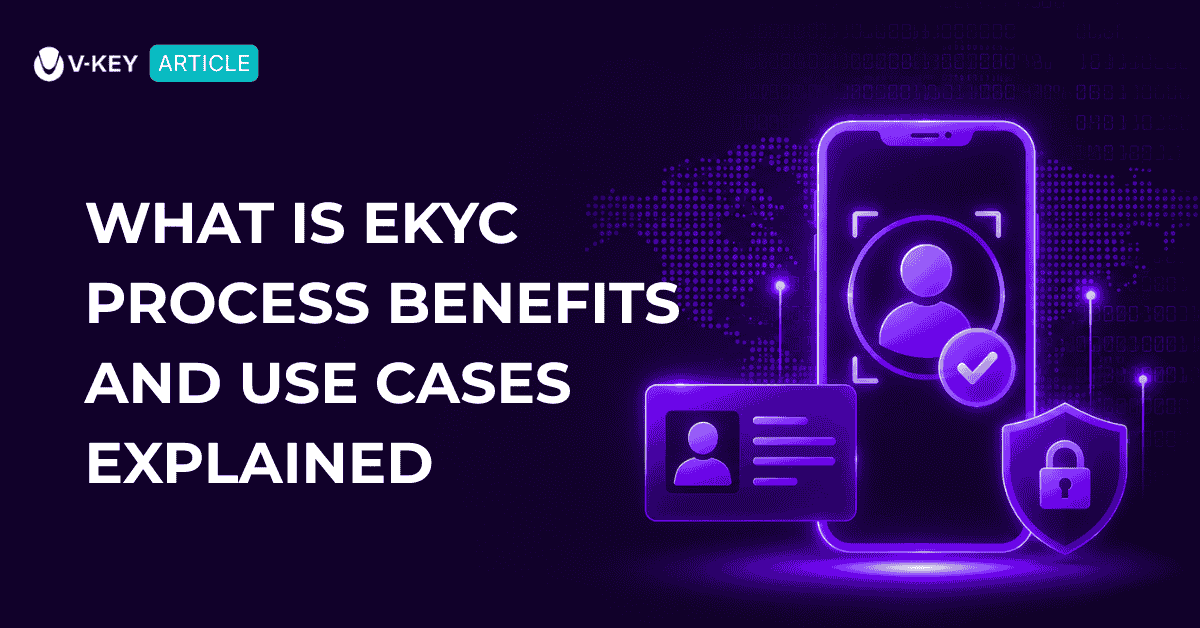
Electronic Know Your Customer (eKYC) is simply the digital process of proving who you are. Instead of making you bring physical documents into an office, companies verify your identity entirely online using ID scans, facial recognition, and background database checks.
This prevents identity theft before an account even gets created. It gives industries like banking, fintech, and government a way to keep scammers out without annoying the real customers who just want to sign up.
How the eKYC Process Works
User Registration
The eKYC process typically starts when a user signs up for an account through a mobile app or online platform. At this stage, the user fills in the personal information necessary for identity verification and customer onboarding.
Identity Document Submission
Next, the user uploads or scans a valid identity document.
Common examples include:
- Passport
- Driver’s license
- National ID card
- Government-issued identification document
Modern document verification technology then automatically extracts and validates the data from these files.
Biometric Verification
Once the document is submitted, the system runs a biometric authentication check. Most eKYC platforms rely on:
- Facial recognition
The system compares the live facial scan directly with the photo on the submitted identity document to confirm a match.
Liveness Detection
Liveness detection ensures that a real, living person is physically present during the verification process.
This step blocks fraud attempts that use photos, videos, deepfakes, or stolen identity documents. By confirming the user is actually there, organizations significantly strengthen identity fraud protection and account takeover prevention.
Data Validation
The system instantly cross-references the user’s details against official registries and public databases. This automated step immediately catches discrepancies or mismatches, keeping the business compliant with mandatory financial regulations.
Secure Account Access
Once the verification wraps up, users can set up their secure authentication methods.
Common options include:
- Multi-Factor Authentication
- Biometric Verification
- Passwordless Login
- Mobile-based Authentication
These controls work to maintain secure access long after the initial verification process is over.
Benefits of eKYC for Businesses
Faster Customer Onboarding
Traditional verification is a slow grind of paperwork and manual checks. eKYC completely flips the script by moving customer onboarding entirely online, letting users handle everything remotely. Because the whole process is so streamlined, plenty of organizations can now greenlight new accounts in minutes instead of making people wait for days.
Better User Experience
Convenience wins every time. Letting people verify their identity right from a smartphone means they never have to visit a physical branch or mail in paperwork.
It provides a massive competitive advantage. A frustrating signup process is one of the fastest ways to lose a customer, which is why top banks pour resources into smoothing out this step.
Stronger Fraud Prevention
Identity fraud remains a major challenge across regulated industries.
eKYC helps organizations strengthen fraud prevention through:
| Fraud Prevention Capability | Benefit |
|---|---|
| Document verification | Detects invalid or altered documents |
| Facial recognition | Confirms user identity |
| Liveness detection | Prevents spoofing attempts |
| Identity proofing | Supports compliance and risk checks |
Lower Operational Costs
Manual verification processes require staff time and resources.
Digital verification helps reduce:
- Paperwork
- Manual reviews
- Support workloads
- Processing delays
This allows businesses to scale customer onboarding more efficiently.
More Secure Mobile Journeys
eKYC works best when combined with:
- Mobile app security
- MFA
- Biometric authentication
- App shielding
- Digital identity protection
Together, these technologies create safer experiences across secure mobile apps.
Common eKYC Use Cases
eKYC supports a wide range of industries.
| Industry | Common Use Case |
|---|---|
| Banking and Financial Services | Account opening and KYC compliance |
| Fintech and Digital Payments | User verification and fraud prevention |
| Telecom | SIM registration and telecom onboarding |
| Government Services | Citizen access to digital services |
| Enterprise Access | Employee identity verification and secure authentication |
The continued growth of digital banking, fintech platforms, and government digital transformation initiatives is increasing demand for reliable digital identity verification solutions.
Why eKYC Needs Strong Mobile App Security
A lot of organizations think the job is done the moment identity verification wraps up. In reality, verifying someone’s ID is just the initial step. Once onboarding is over, businesses still have to actively protect:
- Mobile apps
- User accounts
- Login sessions
- Transactions
- Digital identities
Without strong mobile app security, those verified accounts can easily run into malware, stolen credentials, fraud attempts, or account takeover prevention challenges.
Tying eKYC together with mobile app protection(including shielding) and secure authentication methods like MFA and passwordless login is what actually keeps things secure across the entire customer lifecycle.
Choosing an eKYC and Digital Identity Solution
Businesses need to carefully look over their options before rolling out a digital identity solution.
Look for the following capabilities:
- Strong biometric authentication
- MFA and passwordless authentication support
- Mobile app protection
- Including app shielding
- Fraud prevention features
- Compliance support for regulated industries
- Scalable deployment for global and mobile-first markets
At the end of the day, solutions that loop identity verification together with ongoing protection are the ones that deliver the tightest security and the best user experiences.
How V-Key Identity Powers Compliant eKYC
V-Key Identity helps organizations build secure, compliant eKYC setups by tackling identity verification, authentication, and mobile security all at once. Here is how it comes together:
- V-Key ID for secure identity verification and authentication
- V-OS Biometric Identities for trusted biometric authentication
- Multi-Factor Authentication (MFA) for stronger access control
- Passwordless authentication for frictionless user experiences
You don’t have to ruin the user experience just to stop fraud. Bundling ID verification with secure logins and app protection covers all your bases, from the initial onboarding and compliance checks to keeping that user’s identity safe down the road.
Conclusion
At its core, eKYC gives businesses a straightforward way to verify users online, cut down on fraud, fix messy onboarding experiences, and keep mobile-first services safe.
With digital banking, fintech, telecom, and government services expanding so quickly, eKYC is going to stay central to any digital identity verification strategy. The real win happens when you tie it directly to biometric authentication, MFA, passwordless authentication, mobile app security including app shielding. That is how organizations build digital environments that people actually trust.
Frequently Asked Questions
How does the eKYC process work?
Why is eKYC important for businesses?
What industries use eKYC?
Is eKYC secure?
What is the difference between KYC and eKYC?
Strengthen your eKYC process with secure digital identity, authentication, and mobile app protection built for regulated industries.
Contact V-Key to learn how we can help protect your users, apps, and digital services.