English
 Australia
 Philippines
 日本語
Key Takeaways
- Machine identities significantly outnumber human identities in modern enterprise networks.
- Traditional security tools often treat AI systems like static service accounts instead of autonomous actors.
- Agentic identity combines non-human controls with delegated authority and human accountability.
- Clear ownership boundaries prevent orphan workloads and invisible security blind spots.
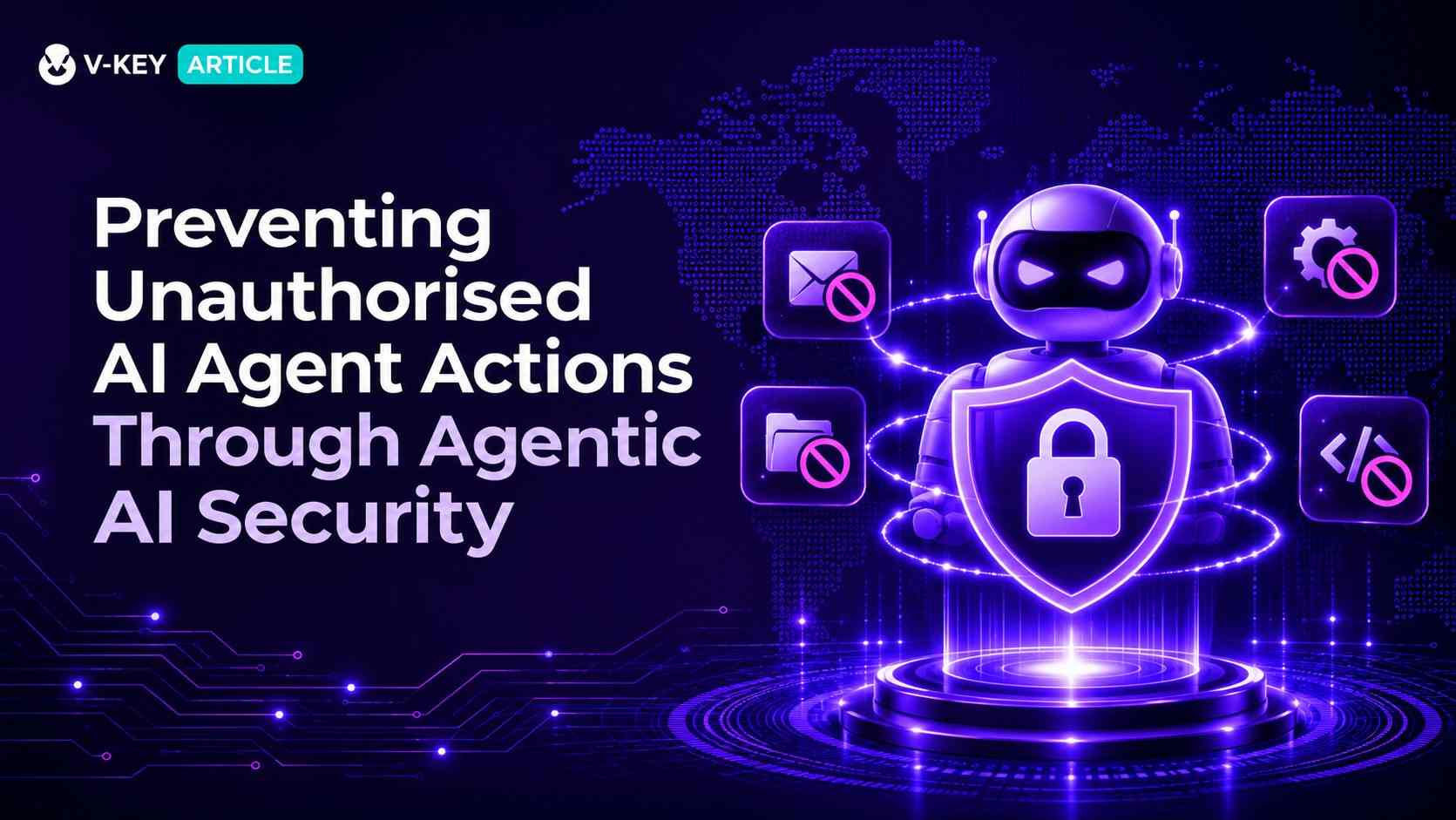
Think of your enterprise network on a busy Tuesday morning. Code is being deployed. Databases are syncing. Dozens of digital workers are pulling files across cloud environments, and not one of them is a person typing away. They’re autonomous AI agents that work with applications, access sensitive data and run complex workflows for users. With businesses across Singapore and the wider region embracing automation, security leaders are asking a pressing question: how do you secure digital workers that make their own decisions and take their own actions?
There’s a clear difference between giving a non-human entity a digital identity and establishing who authorised an AI agent to act. Once a machine has high autonomy, an ordinary credential falls short. Two things are needed here. The agent gets its own digital identity, and it must also be tied, in a way you can verify and trust, to whoever’s responsible for its actions, whether that’s a person or the organisation.
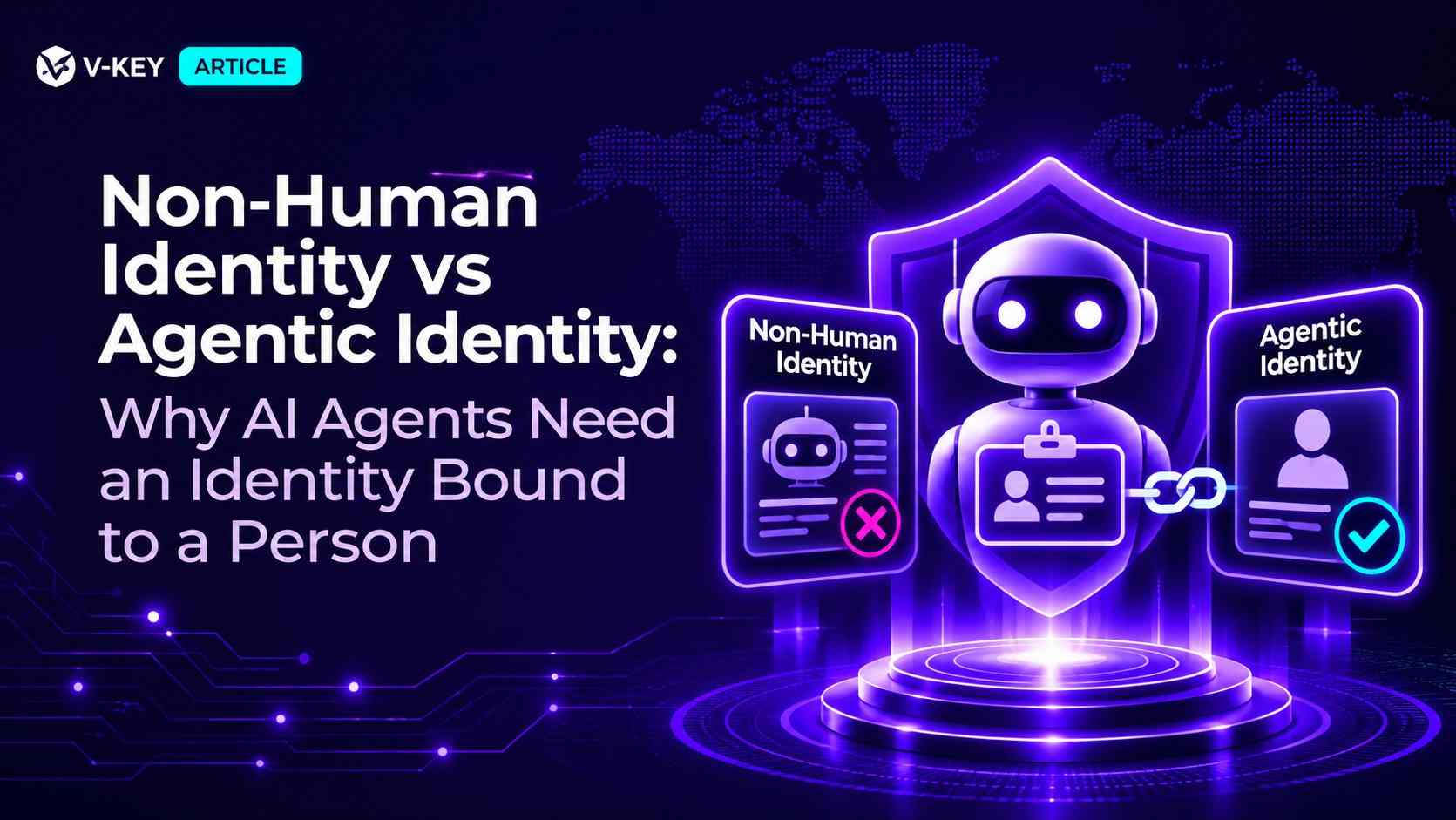
By technical definition, AI agents are a non-human identity (NHI). A static service account is passive, but AI agents act autonomously. Identity alone is never enough. They need delegated authorisation and a verifiable link to a responsible human as well. From here, the crucial contrast between conventional security approaches and modern governance frameworks comes into view.
What Is Non-Human Identity (NHI)?
A non-human identity (NHI) is a digital identity given to anything that isn’t a person: a service account, an API integration, a script, an automated workload or a machine. It handles backend authentication and gives systems access across enterprise infrastructure. To keep these secure, organisations rely on the usual controls, such as passwords, cryptographic certificates, specific access permissions and credential lifecycle management.
It is rarely simple to manage. Poor support in security tooling leaves gaps. So do credentials that stay active long after they’ve served their purpose. CyberArk’s 2024 research estimated that non-human identities outnumber human identities by a staggering 45:1, and Gartner reported that 60% of enterprise access credentials belong to non-human entities. Without diligent oversight, attackers frequently target these credentials first.
What Is Agentic Identity?
Agentic identity is a modern way of giving autonomous AI agents a trusted identity, and of tying their actions directly to the person or organisational authority that authorised them. An AI tool isn’t treated as an anonymous script here. Three things matter instead.
First, you verify that the AI agent is genuine and working within approved parameters. Second, you set out exactly which tasks and actions it’s authorised to carry out. Third, you keep full traceability back to the responsible human or organisational authority. It’s no unrelated category either. Agentic identity builds on foundational non-human identity (NHI) concepts and lifts them to suit the dynamic nature of modern software.
Non-Human Identity vs Agentic Identity: Key Differences
To help enterprise security teams grasp how conventional implementations differ from modern approaches, the comparison below outlines the core distinctions.
| Aspect | Traditional NHI Approach | Agentic Identity Approach |
|---|---|---|
| Primary focus | Identifying and authenticating non-human entities | Identifying agents and establishing delegated authority |
| Typical use cases | Service accounts, APIs, machines | Autonomous AI agents |
| Authorisation | Assigned roles and permissions | Task-specific and contextual authorisation |
| Human accountability | May rely on ownership records | Explicit linkage to responsible authority |
| Traceability | Tracks entity activity | Tracks agent activity and delegation context |
| Security considerations | Credential theft, excessive permissions | Unauthorised actions, agent impersonation, delegation misuse |
These distinctions compare typical approaches, not mutually exclusive capabilities. Mature non-human identity (NHI) programmes can and should evolve as business needs change, so they support delegated authorisation, traceability and accountability too.
Why AI Agents Need an Identity Bound to a Person
Autonomous agents operate across corporate systems. They therefore need a clear, verifiable chain linking their digital identity, their assigned authority and their real-world actions to the people responsible for running them.
Establish Clear Human Accountability
Link an AI agent to a responsible human and organisations can tell exactly who started or approved a specific workflow. This applies equally to log review and routine internal audits. Automated actions never end up in a governance vacuum, as long as there’s clear human accountability behind them.
Prevent Unauthorised AI Agent Actions
Restricted corporate databases remain inaccessible to any AI agent that’s tied to task-specific authorisation, and so is anything beyond its delegated permissions. You’d deal with a leak of sensitive data on a factory floor quickly, wiping spills up promptly. Strict boundaries do the same job here. AI tools simply don’t overstep.
Strengthen Auditability and Traceability
Did a human have to approve it? Which agent acted, and under what specific authority? What was the exact operation? Enterprises need full records for all of this. Without robust traceability, unexpected behavioural drift in complex software environments can expose the business to significant risk.
Support Zero Trust Security Principles
Sensitive assets aren’t opened on trust alone. That’s the idea behind zero trust. Requests from people and machines get validated continuously, then access is granted. Agents get the same treatment, through continuous identity verification, strict least-privilege access and real-time authorisation checks. This is what builds sustained trust.
Maintain Human Oversight for Sensitive Transactions
Some situations are too high-stakes to leave unsupervised, like banking transfers, confidential employee records and sensitive administrative modifications. Mandatory checkpoints for human oversight are essential there. Industry guidelines from bodies like NIST emphasise that agents should have distinct identities and appropriately scoped delegated authority, not a human user’s shared credentials.
Security Risks When AI Agent Identities Lack Human Accountability
Autonomous AI agents that go live without clear ownership, authorisation boundaries and traceability bring serious security and governance problems. Take an orphaned agent. An automated workload built for a temporary project can keep standing database access long after the people who made it have left the company.
These systems often run on shared credentials with no traceability, so security teams can’t pin odd behaviour on a specific owner. Say a compromised agent starts changing critical configuration files. With no human name attached to the activity, investigating the breach is extremely difficult. As AI deployments scale, these invisible vulnerabilities multiply.
How Singapore Enterprises Can Strengthen AI Agent Identity Governance
Rigorous data protection standards and progressive artificial intelligence frameworks define the fast-paced regulatory landscape Singapore organisations deal with. Local governance expectations call for agentic identity principles, and that starts with seeing AI agents as active participants in your security posture. They’re not passive background scripts. Map out comprehensive policies for the entire credential lifecycle, so each automated workload has an assigned owner, a defined expiration date and regular access reviews.
How V-Key’s Agentic Identity Supports Trusted AI Agent Interactions
V-Key tackles the modern security challenge with robust agentic identity solutions. They build trust between AI agents, their authorised tasks and the humans responsible for them. Conventional non-human identity (NHI) architectures lack a layer, and this approach fills it with rigorous agent verification, delegated authority and transparent traceability. Trusted digital identity frameworks and advanced authentication principles help enterprises secure their AI agents, and innovation doesn’t slow down.
Building Accountability into the Future of AI Agent Security
Who authorised an action? What’s the agent permitted to do? How can its activities be traced? Those three answers are what securing autonomous AI agents comes down to. Traditional non-human identity (NHI) controls still keep backend applications and cloud infrastructure secure, and they’re vital. They do not go far enough on their own that intelligent automation is on the rise. Tie machine activity to responsible human oversight and security leaders can embrace innovation with greater confidence.
Frequently Asked Questions
How do I inventory the AI agents already running in my environment?
Do existing NHI or secrets-management tools cover AI agents?
How do you revoke an AI agent’s authority?
Can an agent act on a human’s credentials?
How can organisations link AI agents to responsible humans?
See how V-Key’s Agentic Identity binds every AI agent to a verified, accountable human identity.